Extrait, eau de parfum, eau de toilette: choosing the right concentration
What the names on the bottle mean, and how to choose the strength that fits your brand, your price and your market.
In this article
In short
- The names describe how much fragrance concentrate is dissolved in alcohol, by industry convention rather than by law.
- A higher concentration usually brings more depth and longevity, and a higher cost per bottle.
- The right choice depends on your brand, your price point, your market and the composition itself.
Extrait, eau de parfum, eau de toilette: the words on the bottle tell the customer something about strength and luxury, and they tell a brand owner something about cost and positioning. Yet they are often misunderstood. Here is what the names mean and how to choose the right one for your line.
What the names mean
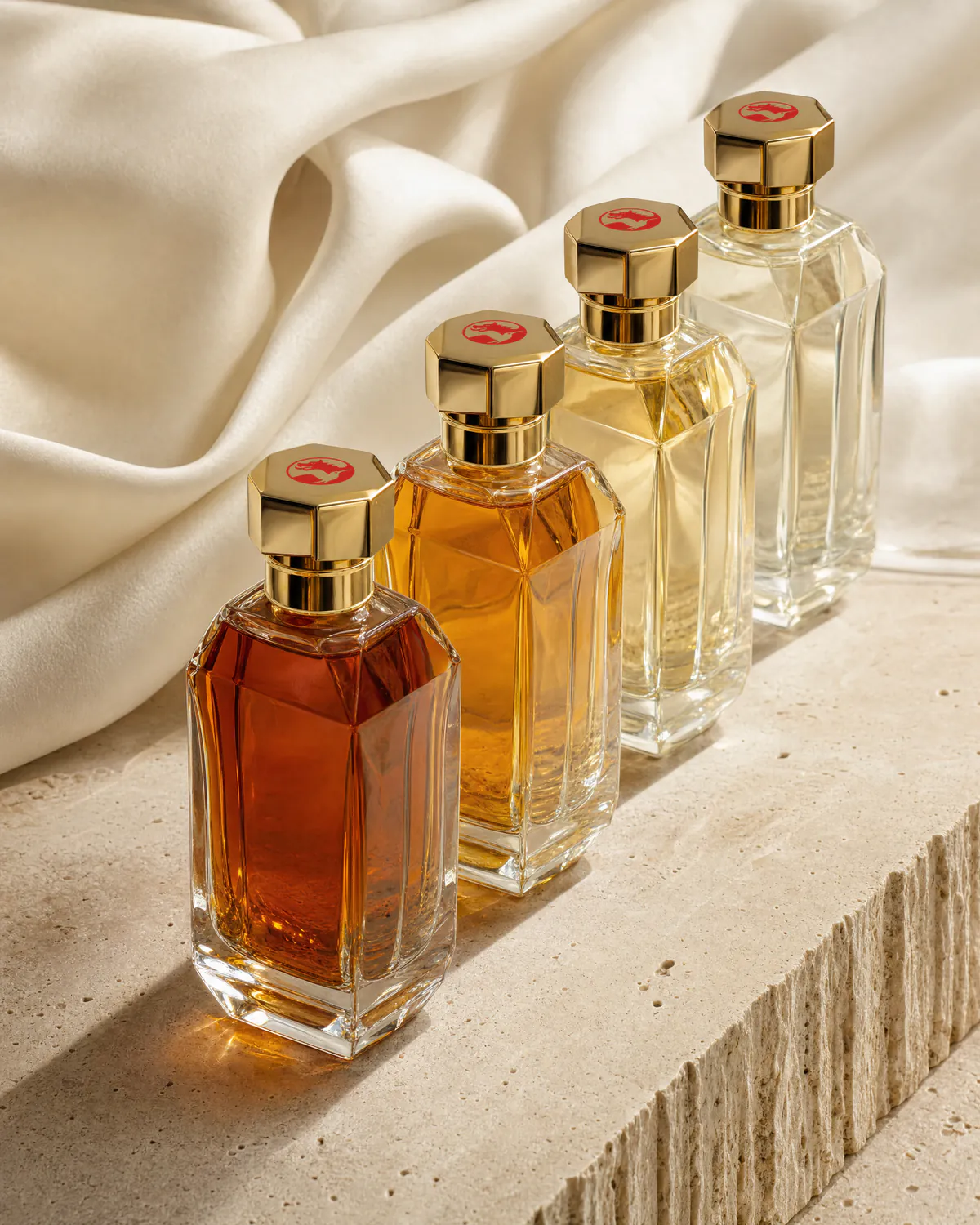
A fine fragrance is a fragrance concentrate, the perfumer's formula, dissolved in perfumer's alcohol. The name describes roughly how much concentrate the finished product contains. These are industry conventions rather than legal definitions, and every house sets its own levels, but typical ranges are:
- Extrait de parfum: the richest form, often around 20 to 30 percent concentrate.
- Eau de parfum: commonly around 15 to 20 percent.
- Eau de toilette: commonly around 5 to 15 percent.
- Eau de cologne: a light form, often around 2 to 5 percent.
Because the ranges vary, two eaux de parfum from different brands can feel quite different in strength. What matters is the result on skin, not the label alone.
Strength is not the same as longevity
A higher concentration usually lasts longer and projects more, but the composition matters just as much. Base notes such as woods, musks, resins and vanilla evaporate slowly and anchor a fragrance for hours, while bright citrus and aromatic notes fade faster. A well-built eau de toilette can outlast a poorly balanced eau de parfum.
That is why the concentration should be decided together with the composition, not after it. A perfumer may adjust a formula so that it performs at the strength you choose.
Cost, price and positioning
More concentrate means a higher cost per bottle. An extrait signals rarity and luxury and supports a premium price, while an eau de toilette lets a brand offer a lighter, more accessible version of the same signature. Many brands use this deliberately, launching a scent as an eau de parfum and later adding an extrait or a lighter edition for a different customer and occasion.
Concentration is a creative decision as much as a commercial one.
Climate, habits and the market
How people wear fragrance differs from market to market: how often they apply it, at what time of day and in which climate. In warm weather a composition can feel stronger and evolve faster, so it is worth evaluating samples in conditions close to those of your customers before you fix the concentration.
Making the decision with your fragrance house
When you brief a new fine fragrance, say which concentration you have in mind and why. Your fragrance house can then compose for that strength, advise on maceration time before filling and plan stability testing at the final dosage. The IFRA Standards set maximum levels for some materials in the finished product, so the concentration also affects which formulas can be used.
If you are planning a line for any of the markets we serve, tell us about it. We will help you choose a concentration that suits your brand and your customers.