How to write a fragrance brief that gets the right first sample
The questions a perfumer needs answered, and the details that save weeks of back and forth.
In this article
In short
- A strong brief describes the consumer and the moment, not only the notes.
- Technical facts such as product type, dosage and target cost shape the fragrance as much as the creative direction.
- Clear references and clear "no-gos" help the perfumer more than a long list of adjectives.
Every fragrance project begins with a brief. It is the document a perfumer reads before composing a single trial, and the quality of that page decides how many rounds of samples it will take to reach the right fragrance. A vague brief invites guesswork. A clear one lets the perfumer spend their talent on the creative work rather than on decoding what you meant.
You do not need to be a perfumer to write a good brief. You need to know your brand, your customer and your market, and to share that knowledge in a structured way. Here is what to include.
Start with the brand and the consumer
Describe who the fragrance is for and where it will live. Is it a signature scent for a new brand, an addition to an existing line or a limited edition? Who buys it, at what age, for which occasions? A fragrance for a young urban audience who buys online will be built differently from one sold in department stores to a loyal, established clientele.
Describe the feeling, then the notes
Lead with the emotion and the moment you want to create: a summer evening in a garden, the confidence of a crisp white shirt, the comfort of a cashmere scarf. Then add the olfactive direction you have in mind, such as a floral heart, a woody base or a fresh citrus opening. Perfumers translate feelings into accords every day, and a vivid image often says more than a list of ingredients.
The composition is the perfumer's art. The brief is yours.
Give the technical frame
This is where many briefs fall short. The same creative idea is built very differently depending on its technical frame, so share as much as you can:
- Product type: extrait, eau de parfum or eau de toilette, or a functional product such as a soap, candle or diffuser.
- Base and dosage: the product the fragrance goes into and the concentration you plan to use.
- Target cost: the price range for the fragrance concentrate, which guides the choice of materials.
- Packaging: the bottle or container, which matters for stability and colour.
Name the market and its rules
Tell us where the product will be sold. Markets differ in taste, in climate and in regulation. The countries you sell in determine the documents you will need, from the IFRA Certificate of Conformity to the allergen information on your label, so it is far easier to plan for them from the start.
Share references and no-gos
Name two or three fragrances you admire and explain what you like about each one: the opening, the trail, the way it dries down. Be just as clear about what you do not want. "Nothing too sweet" or "no strong animalic notes" saves a round of samples that would otherwise miss the mark.
Agree the timeline and the evaluation
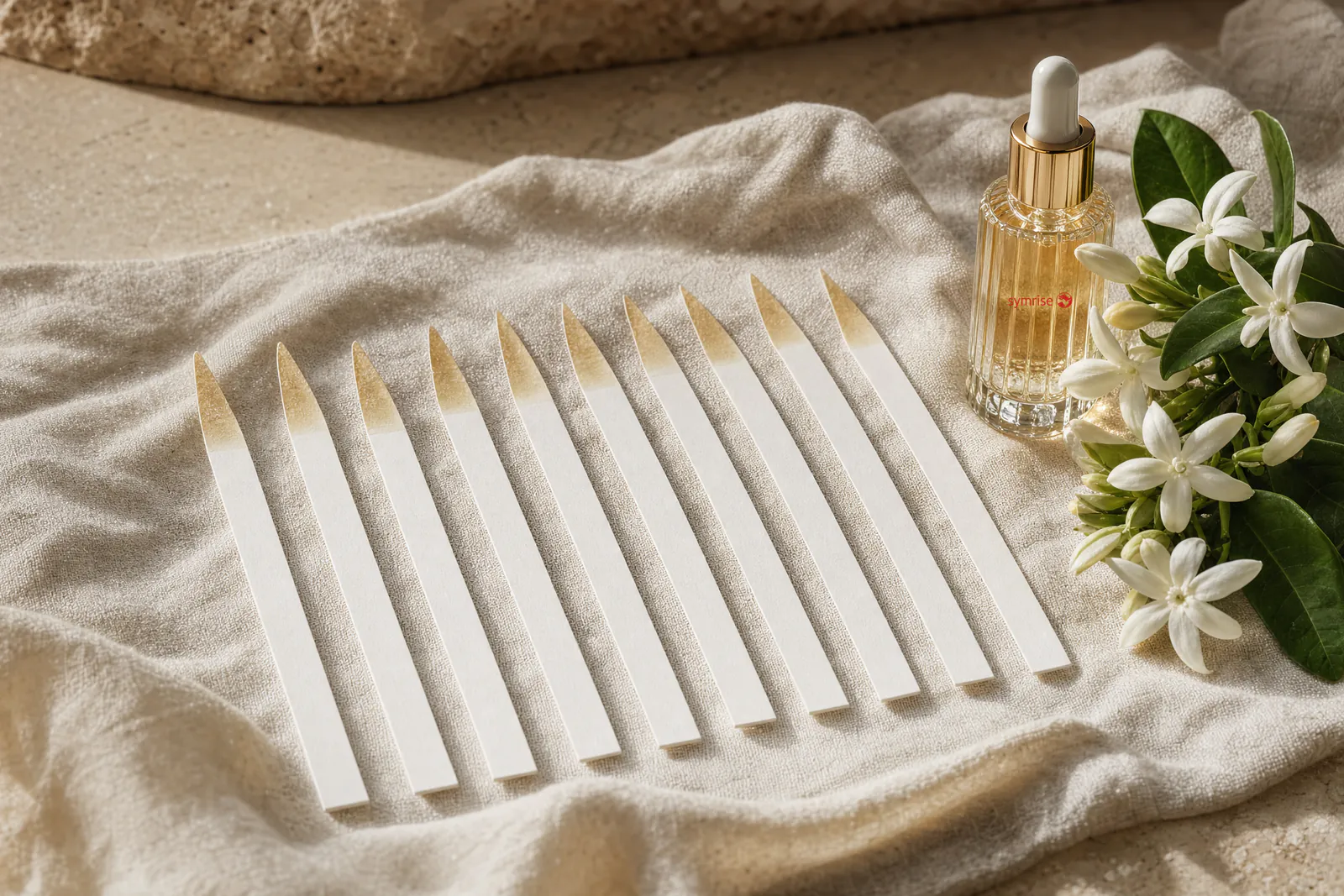
Share your launch date and work backwards: rounds of samples, evaluation on smelling strips and on skin, stability testing and documentation all take time. Decide who on your side evaluates the samples and how feedback will be given, so every round moves the project forward.
When you work with Andarz, we help shape the brief with you before it reaches Symrise perfumers, so the first sample is as close as possible to what you imagined. Send us your idea, even in a few lines, and we will help you build the rest.